

Whiteboard animation software often appears to be a budget-friendly solution. It’s low-cost, easy to access, and offers quick ways to generate animated content in-house. For budget-conscious teams, it can feel like a shortcut to engaging communication. But for CFOs and business leaders responsible for evaluating total investment and impact, that quick win may come with costly tradeoffs.
Key takeaways:
- Template driven software platforms rely on prebuilt characters, icons, and animations, which results in videos that look and feel generic and interchangeable rather than tailored to the message or audience.
- Professionally produced whiteboard videos are created from the ground up for a specific objective, audience, and context, with custom visuals that reinforce the message instead of forcing ideas into clip art style constraints.
- Whiteboard animation software shifts the work of video creation onto internal teams, creating hidden labor costs and delays.
- DIY video tools may save money upfront but often result in slower decision-making, unclear messaging, and higher total costs over time.
- Professionally produced whiteboard videos reduce internal effort, align content with strategy, and improve message clarity and adoption rates.
- CFOs should evaluate video options using a framework based on internal labor, revision risk, time to impact, and business outcomes, not just sticker price.
The Financial Reality Behind Whiteboard Animation Software
Most whiteboard animation software markets itself as a fast, affordable way to create explainer videos. With pre-designed templates, drag-and-drop functionality, and stock visuals, these tools promise rapid turnaround without the cost of a creative agency.
But once teams begin using the software, they quickly discover what those tools don’t include: the script, the story structure, the narrative strategy, and the communication clarity needed to drive real results.
On the other hand, expert-produced whiteboard videos are built differently from the start. While they require more planning upfront, that effort reduces friction later. Scripts are written to drive clarity and understanding. Visuals are created to simplify ideas and keep the message easy to follow. This results in better alignment among stakeholders, fewer revisions, and faster execution.
Read on to see how whiteboard animation software and professional production differ in cost, effort, and outcomes, and how finance leaders can decide which one makes sense for their situation.
The True Cost of Whiteboard Animation Software
For CFOs focused on managing expenses, whiteboard animation software might seem like the smarter choice. Tools like Vyond, Doodly, and VideoScribe advertise low monthly fees and intuitive interfaces. But what those fees don’t account for is the time and effort your internal teams must invest to turn a blank template into a strategic asset.
Behind every whiteboard video created with DIY software are dozens of small decisions and coordination tasks. Those responsibilities don’t vanish. They shift internally. The result? Delays, misalignment, and a growing burden on your team.
Why low software costs can mask higher operational expenses
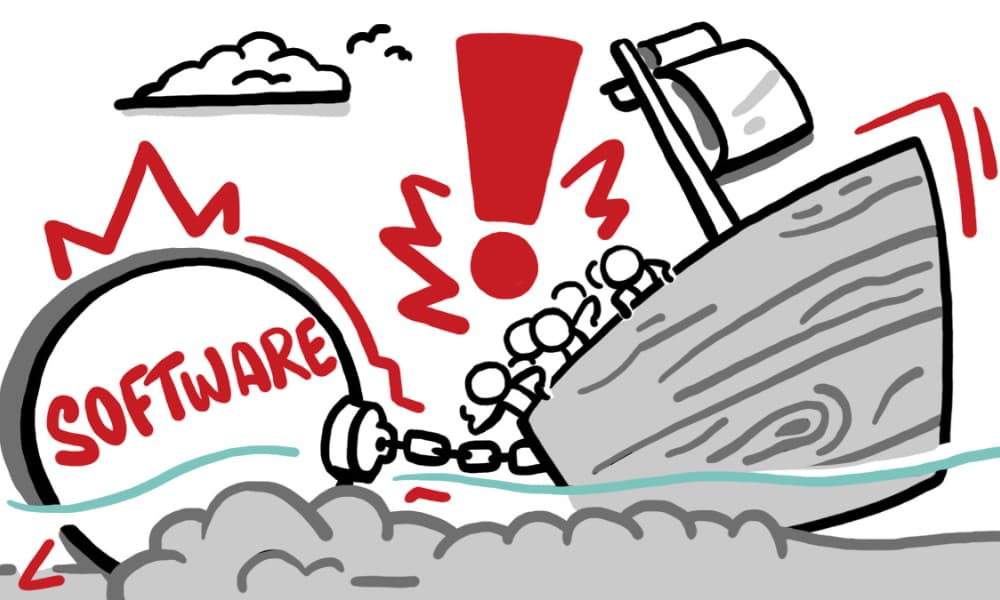
When you factor in the internal hours spent scripting, revising, and project managing a corporate video created with whiteboard animation software, the total investment can easily exceed the cost of professional production.
Here’s how that cost builds:
- Scripting: Teams may spend days writing and revising content without storytelling expertise.
- Visual development: Choosing the wrong images or overloading scenes can confuse viewers.
- Revisions: Misalignment on messaging leads to multiple feedback rounds and delays.
Time is money. And that time, spread across multiple internal contributors, can derail more strategic work.
When “good enough” messaging creates strategic risk
Software can enable speed, but speed without clarity carries a cost. Videos may look polished yet still fail to clearly explain value, leaving viewers unsure what matters or what to do next. The topic may be understood, but the decision or action is not.
That lack of clarity creates follow-on issues. Sales teams spend more time explaining, product teams answer the same questions repeatedly, and leadership starts asking why adoption is slower than expected. The financial impact shows up gradually, through delayed uptake, lower confidence, and weaker results from broader strategic efforts.
Comparing DIY Whiteboard Animation Software To Professional Execution
Once the initial cost discussion moves on, the focus turns from price to performance. Animation software and professional production can both produce a finished video, but they rarely lead to the same result.
The difference shows up in the quality of the script, the clarity of the visuals, and how much rework is needed to get everyone aligned. From a finance perspective, these factors directly affect efficiency, time to impact, and the value gained from communication efforts.
The Cost of Rework and Misalignment
When scripts are created without real expertise in visual communication, they tend to lean heavily on features instead of outcomes. Even when the information is accurate, it often misses how audiences actually process information and make decisions, which leads to videos that explain a topic but fail to move people toward a clear conclusion. Visuals can add to the problem when they mirror that complexity, layering on detail instead of helping the message feel simpler and easier to grasp.
The cost shows up later, usually in the form of rework. Stakeholders ask for changes not because anything is factually wrong, but because the video is not landing the way it should. Each revision adds time, introduces friction, and pushes delivery further out, quietly increasing the overall investment far beyond the original software fee.
Why Professional Whiteboard Videos Create Better Outcomes
At TruScribe, we approach every video with Scribology, a method grounded in neuroscience, behavioral psychology, and visual storytelling best practices.
Here’s how professional visual storytelling differs from whiteboard animation software:
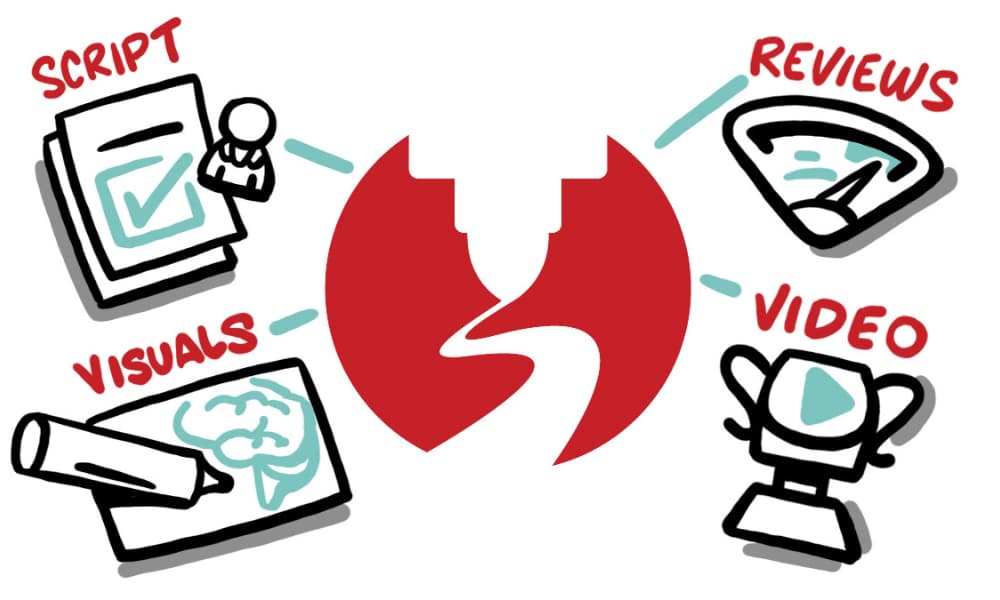
1. Strategic Scripting: Instead of dumping facts into a timeline, we build a narrative designed to engage attention and lead to understanding. We ask the right discovery questions early—so you avoid misalignment later.
2. Clarity-Driven Visuals: Our artists create purposeful imagery that simplifies, not overwhelms. Every element supports comprehension, not decoration.
3. Fewer Revisions, Faster Execution: Because we solve the messaging problem up front, we reduce the need for time-consuming rework later.
4. Less Internal Effort: Your team isn’t stuck managing the process. We handle script development, visuals, timing, and pacing, freeing your employees to focus on higher-value work.
Real-World Comparison: Software vs. Professional Production
A Typical Whiteboard Animation Software Scenario
- Marketing or HR teams use software to build a product launch or benefits video.
- Internal scripting lacks audience perspective.
- Feedback cycles grow as stakeholders push for changes.
- Launch delays. Adoption lags. Teams spend time clarifying post-launch.
A TruScribe Professional Production Scenario
- Script is shaped with clear goals and audience needs in mind.
- Visuals support clarity and recall.
- Internal reviews are smoother.
- The video launches with strong alignment and delivers immediate impact.
How to Evaluate the Total Cost of Whiteboard Video Creation
ROI extends beyond the cost to create the video. A simple comparison often reveals the difference: a lower-cost video that delays adoption by weeks can cost more in lost productivity and revenue than a higher upfront investment that accelerates understanding.
CFOs should anchor decisions on key metrics such as time-to-impact, internal labor avoided, and reduced follow-up efforts. Here’s a simple Finance Leader’s Checklist for Evaluating Video Investment to help make the evaluation practical:
- Strategic alignment: Does the video clearly map to business goals?
- Audience clarity: Are key messages easy to understand and act upon?
- Internal labor: How many employee hours are required for scripting, reviews, and revisions?
- Revision risk: How likely is repeated iteration due to unclear messaging?
- Adoption impact: Does the video accelerate understanding and decision-making?
This checklist provides a concise framework for CFOs to compare DIY software against professional production and make confident investment decisions.
Why Software Isn’t Always the Scalable Choice
Whiteboard animation software may work for small, one-off projects. But when communication is complex, or the stakes are high, DIY tools can become a liability.
For organizations that need to:
- Roll out new programs across global teams
- Explain nuanced healthcare or benefits details
- Align stakeholders around strategy
- Drive change or adoption
…the risk of unclear messaging is simply too high. Professional whiteboard videos are more effective, efficient, and scalable.
Whiteboard Animation Software: Great Tool, Wrong Use Case?
We’re not here to say all whiteboard animation software is bad. In fact, it can be great for the right use cases such as quick internal updates or informal sharing. But when clarity, scale, and strategic outcomes matter, software isn’t enough.
Final Thoughts: Focus on What Drives ROI
Ultimately, CFOs should evaluate video communication like any other investment: based on return. Not just how much it costs to create, but what it costs to get it wrong.
Whiteboard animation software may look affordable up front. But the hidden costs such as time, labor, revisions, and delayed results, can add up quickly.
Professional visual storytelling, such as TruScribe’s whiteboard video process, may require more investment initially, but it returns value faster by delivering clarity, reducing internal effort, and aligning stakeholders from day one.
Ready to reduce internal friction, move messages faster, and drive better outcomes?
Contact us now to get started.