

Employee training often fails, not because the content is wrong, but because it’s forgotten when it matters most. One of the most effective ways to fix this is through the advantages of whiteboard storytelling. This approach improves understanding, recall, and behavior.
Key takeaways
- Whiteboard storytelling turns complex ideas into clear, easy-to-follow visuals.
- It improves engagement and recall by combining visuals with audio.
- It reduces cognitive overload and makes training easier to absorb.
- Teams see faster onboarding, stronger compliance, and clearer communication.
- TruScribe delivers these benefits through expertly crafted, memorable whiteboard stories.
Whiteboard storytelling taps into how the brain naturally processes information. Humans are wired for visuals, story, and motion. We learn best when we see and hear ideas unfold, not when we’re forced to decode dense text or memorize abstract rules.
TruScribe’s approach is rooted in Scribology, a methodology built on neuroscience, behavioral psychology, and visual learning science. Every video is handcrafted to clarify complexity, trigger engagement, and turn information into action.
Let’s break down the core advantages of whiteboard storytelling.
Advantage #1: Better understanding
Research shows that we process visuals 60,000 times faster than text. That’s why long blocks of copy and cluttered slides lead to confusion. When employees are overwhelmed, they may nod along in training, but real comprehension never happens.
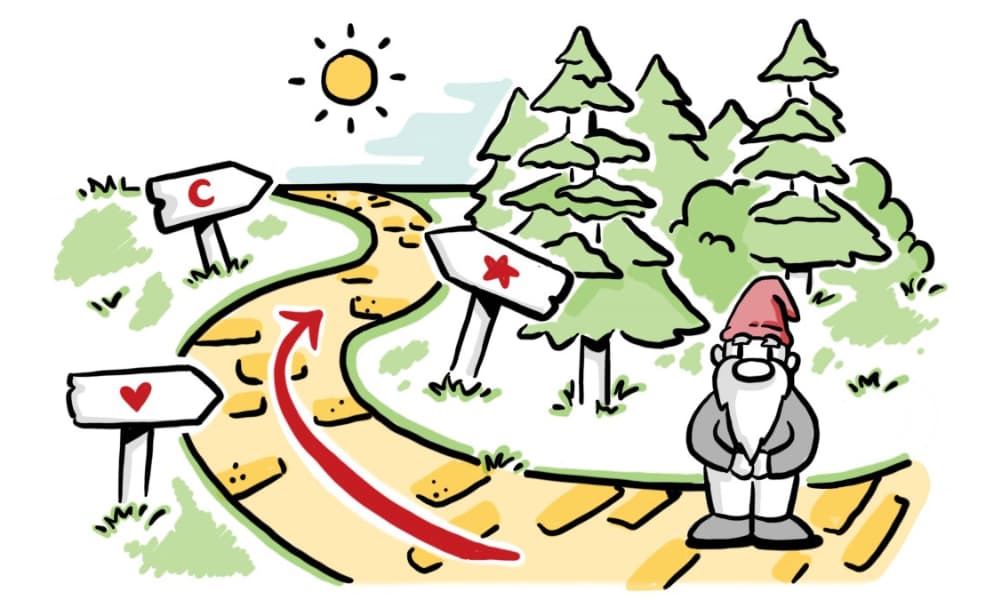
Whiteboard storytelling combats this by unfolding ideas gradually. Visuals are drawn in sync with narration, creating a clear, sequential path through the message. This multi-modal format activates several cognitive channels:
- Sight: Hand-drawn visuals that guide attention and highlight key concepts
- Sound: Voiceover that explains, clarifies, and reinforces meaning
- Text: Minimal keywords or phrases to anchor understanding
- Interaction (optional): Built-in pauses or prompts for reflection
This combination makes learning feel more intuitive and less like a mental sprint. Complex concepts become easier to digest and retain.
Advantage #2: Improved recall
Understanding a concept is only half the equation. If employees can’t recall what they’ve learned when it matters, the value of training quickly breaks down. Missed steps, inconsistent decisions, and avoidable mistakes often stem from information that became inaccessible over time.
Whiteboard storytelling boosts recall through dual-channel learning, a principle in cognitive science that says we remember more when we absorb information both visually and audibly. In other words: we remember best when we see and hear something together.
TruScribe’s videos are built to leverage this effect. Instead of relying on passive reading or isolated visuals, they deliver synchronized narration and illustration, helping knowledge move from short-term exposure into long-term memory.
Employees are more likely to recall key points, explain them accurately, and act with confidence when the situation calls for it.
Advantage #3: Reduced cognitive overload

Ever sat through a training filled with dense slides, tiny fonts, and walls of text? That’s cognitive overload in action. When employees are asked to process too much at once, their brains hit a wall.
Whiteboard storytelling is engineered to reduce that strain. By sequencing information into manageable, visual chunks, it keeps learners focused and avoids distraction. Key points are highlighted. Distractions are eliminated. And the story guides viewers logically from one idea to the next.
The result: Less mental fatigue. More clarity. Stronger outcomes.
Advantage #4: Faster and more effective onboarding
A smooth onboarding experience helps new hires contribute quickly and confidently. But when early training is unclear or overwhelming, confusion sets in and ramp-up time stretches out.
Whiteboard storytelling accelerates onboarding by clearly illustrating company structure, expectations, workflows, and culture. Instead of wading through dry presentations or jargon-heavy documents, new employees see how things work in action.
That means fewer questions, fewer early mistakes, and faster alignment with team goals. It also lightens the load on HR and managers who support new hires.
Advantage #5: Stronger compliance training
Compliance training is non-negotiable. Among the many advantages of whiteboard storytelling is its ability to bring dry, procedural content to life, making policies easier to understand, follow, and remember. From safety procedures to data privacy policies, organizations rely on consistent behavior to avoid risk. But most compliance programs suffer from the same problem: too much content, poorly delivered.
Whiteboard storytelling turns dry rules into engaging, visual scenarios. Employees can actually see what compliance looks like in practice. That makes expectations more concrete and much easier to follow.
Imagine videos that:
- Walk through emergency response steps
- Illustrate proper handling of sensitive information
- Clarify what’s allowed under new conduct policies
By helping employees visualize the right behavior, whiteboard storytelling drives better adherence and fewer mistakes.
Advantage #6: Better benefits education
Benefits are personal and often confusing. HR leaders know how important it is for employees to understand their healthcare options, retirement plans, and other perks. But too often, that information is buried in long PDFs or one-size-fits-all slide decks.
Whiteboard storytelling brings benefits to life. Instead of reading about plans, employees watch real-life examples play out:
- Comparing healthcare coverage
- Seeing how employer matching works
- Navigating enrollment deadlines
The result? More confident decisions. Higher enrollment. Better use of available resources.
Read: The Ultimate HR Guide to Effective Benefits Communication
Advantage #7: Clearer policy updates
Policy changes happen often. Unfortunately, they’re usually announced via long emails or formal memos that employees skim, if they read them at all.
Whiteboard storytelling makes updates easier to understand and remember. By visually highlighting what’s changed, what’s expected, and what actions employees should take, videos help ensure policies are actually followed.
Use cases include:
- Explaining how a new remote work policy affects scheduling
- Walking through revised data access rules
- Showing examples of conduct do’s and don’ts
With whiteboard storytelling, updates are more than announcements, they’re moments of alignment.
Advantage #8: Stronger Change Management Communication
Organizational change is inevitable, whether it’s restructuring, tech rollouts, new leadership, or shifts in strategy. But even when changes are necessary, poor communication can create fear, resistance, and confusion across your workforce. If your organization is preparing for change, don’t overlook the advantages of whiteboard storytelling to foster alignment.
Whiteboard storytelling supports smoother transitions by explaining change clearly and empathetically. Instead of vague emails or impersonal slide decks, you can use visual stories to:
- Contextualize why the change is happening
- Walk through how it will impact different teams
- Show what successful adoption looks like
- Reinforce the timeline and next steps

This format fosters trust, reduces anxiety, and builds alignment across departments. Employees feel informed, not blindsided. And that makes them more likely to engage with the process rather than resist it.
When people understand the why behind a change, they’re more likely to embrace the how. Whiteboard storytelling brings that clarity and connection to the forefront.
Whiteboard Storytelling that Works
At TruScribe, we design communication that works. Our Scribology process is designed to make information stick by engaging the brain the way it naturally learns. Every project is guided by a blend of science and story, built to meet your goals and speak to your audience clearly.
Here’s how we do it:
- Script: We start by aligning on the message. What’s the goal? What behavior needs to change? What’s confusing today that needs clarity tomorrow?
- Audio: Professional voiceover brings the message to life, using tone, pace, and delivery that support understanding and retention.
- Storyboard: Hand-drawn visuals are planned to match each spoken idea. No filler, no fluff. Every frame supports comprehension.
- Production: Our illustrators, designers, and animators create your video by hand, drawing live to match the audio for maximum impact.
- Post/Mastering: We polish, sync, and deliver your final product on time, on brand, and built to perform.
- Cut onboarding time by 30–50%
- Improve post-training retention and assessment scores
- Drive policy adoption across global teams
- Simplify benefit choices for diverse workforces
And because we track and measure our results, we know this approach delivers. And we stand behind it: clients who follow our process see a 200% return on their projects.
Let’s Turn Training into Transformation
The advantages of whiteboard storytelling become clear when training actually changes behavior. Whether you’re rolling out a new initiative, revising workplace policies, or simply trying to make benefits less confusing, whiteboard storytelling can help you succeed where traditional methods fail.
If you’re ready to make your training more engaging, more effective, and more memorable, we’re here to help.
Book a discovery call today and see how TruScribe can bring your message to life.